

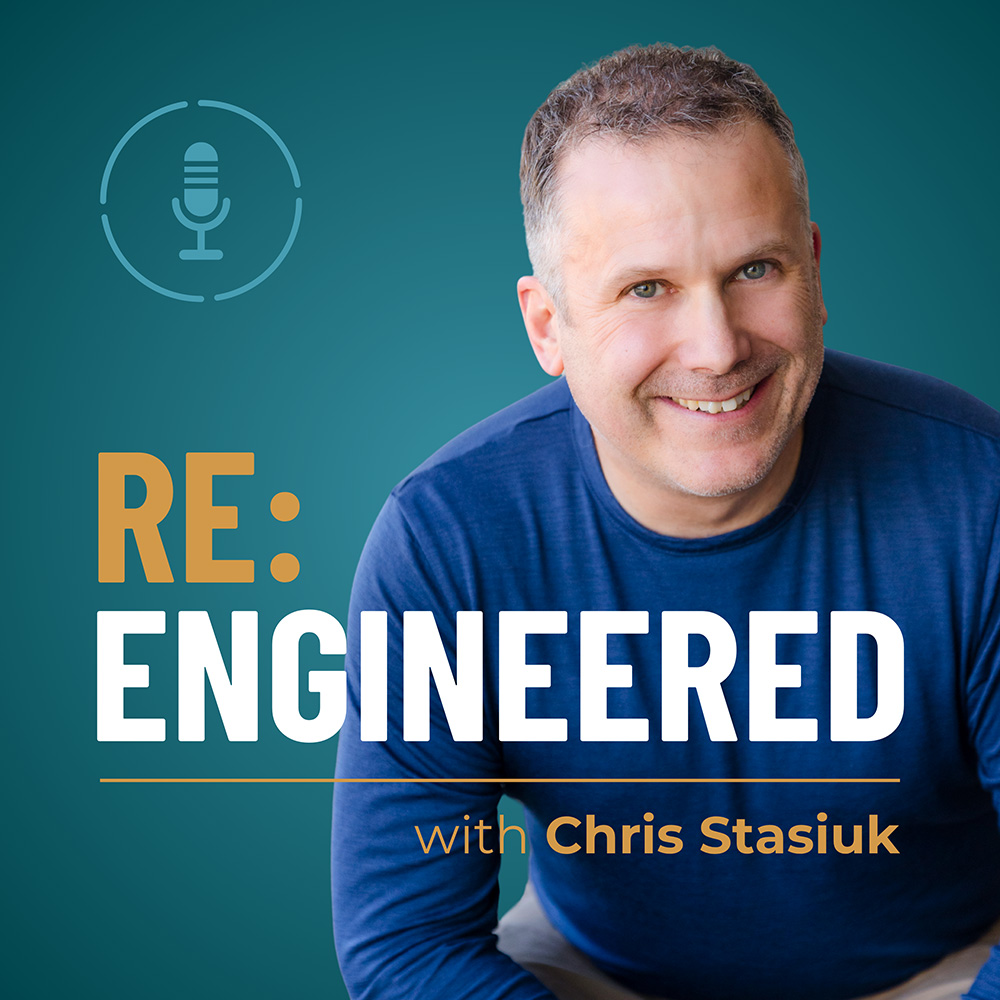
26 Jan Episode 006 – Why Engineers Struggle to Trust Themselves in Leadership
Summary
In this episode, Chris Stasiuk explores the transition engineers face when stepping into leadership roles, highlighting the common feelings of uncertainty and self-doubt that arise. He emphasizes the distinction between confidence and self-trust, explaining how engineers often rely on external validation and struggle with judgment in ambiguous situations. The conversation delves into the importance of making decisions and learning from outcomes to rebuild self-trust, ultimately framing leadership as a skill that requires practice and internal validation.
Takeaways
- Engineers often feel less certain in leadership roles than as technical experts.
- Self-trust is different from confidence; it’s about trusting your own judgment.
- Leadership problems lack clear answers and require judgment under uncertainty.
- Many engineers misinterpret uncertainty as incompetence.
- Self-trust is built by making decisions and learning from them.
- Waiting for certainty can hinder decision-making in leadership.
- Ambiguity in leadership can lead to discomfort and second-guessing.
- Trusting your judgment is a skill that needs to be practiced.
- The journey from engineer to leader involves recalibrating self-trust.
Transcript
This transcript was produced by robots and left as-is. Accuracy and elegance are not guaranteed.
Okay, up to this point in the podcast, we’ve been talking about patterns, invisible competence, overusing certainty, becoming indispensable, staying longer than you should. And there’s a common thread running through all of them. A lot of engineers step into leadership roles, feeling less sure of themselves than they ever did as technical experts.
Not less capable, just less certain. That confusion catches people off guard. They’ll say things like, I know I’m good at what I do, so why do I feel so unsure now? This episode is about that question, because the issue isn’t about confidence, it’s self-trust. And those two things are not the same. If you look back over the last few episodes, there’s been a progression. First, you stop being able to see your value clearly. Then, you compensate with certainty. When certainty stops working, you compensate with performance. And when performance traps you, you rationalize staying. And over time, something subtle happens. You start to doubt your own judgment. Not all at once.
Quietly, slowly, and that’s where many engineers get stuck. So here’s the core idea around that. Engineers don’t struggle with self-trust because they’re bad leaders. They struggle with it because they’ve been trained to outsource judgment. Let me explain. Early in your career, that makes sense. You rely on data, on specifications, on standards, on senior approval, and you’re rewarded for it. Correctness matters. Certainty matters. Reliability matters. But leadership problems don’t come with full information. There’s no spec sheet for a difficult conversation. No calculation that tells you exactly when to push, when to wait, or when to walk away.
When engineers step into leadership roles, the rules change quietly, and no one tells them. The things that used to validate your decisions don’t show up as clearly anymore. And when external validation fades, internal trust hasn’t been built yet. That gap feels like uncertainty. And many engineers misinterpret that uncertainty as incompetence.
Let me give you a concrete example from my own experience. There was a point in my career where I was leading a team in a new city. I had built a branch office from scratch. New clients, new projects, new industry, new people.
From the outside, it looked like success, but internally, I was second guessing myself constantly. Not about the technical work, about decisions involving people, priorities, and direction. There wasn’t a clear right answer, and I kept looking for confirmation that I was doing the right thing. From metrics, from feedback, from approval higher up the chain.
The more ambiguous things became, the more uncomfortable I felt. What I didn’t realize at the time was that nothing was actually going wrong. I was operating in a space where judgment mattered more than certainty, and I hadn’t practiced trusting my own decisions yet. I wasn’t failing, I was untrained. This is the distinction that matters.
Leadership uncertainty is not a signal that you don’t belong. It’s a signal that the work has changed. Technical problems reward correctness. Leadership problems require judgment under incomplete information. And judgment always feels riskier than calculation. Because you can’t hide behind certainty. You own the call. That’s uncomfortable, but it’s also the skill. This is where people often go wrong. They try to eliminate uncertainty. They wait for more data, more consensus, more permission, but leadership doesn’t work that way. Self-trust isn’t built by waiting until you feel sure. It’s built by making decisions before you are in small bounded ways and then living with the outcome. Not beating yourself up and not rewriting history, just noticing. Did that decision hold? What did I learn? What would I adjust next time? That’s calibration. And calibration is how trust gets rebuilt.
Not through confidence, through experience. So here’s a simple thing to pay attention to this week. Not something to fix, just something to notice. When you hesitate, ask yourself, am I waiting because this decision genuinely needs more information or is it because I don’t trust myself to make it yet? There’s no right answer, but that question starts shifting judgment back where it belongs with you. So this episode closes the first arc of the podcast. We started talking about invisible competence. We end by talking about self-trust. Everything in between connects those two points. In the episodes ahead, we’ll get more practical. Decision-making, boundaries, influence, conversations that actually move things forward, and some interviews. But all of that rests upon this foundation, learning to trust your judgment again, not recklessly, not blindly, but deliberately.
Sorry, the comment form is closed at this time.