

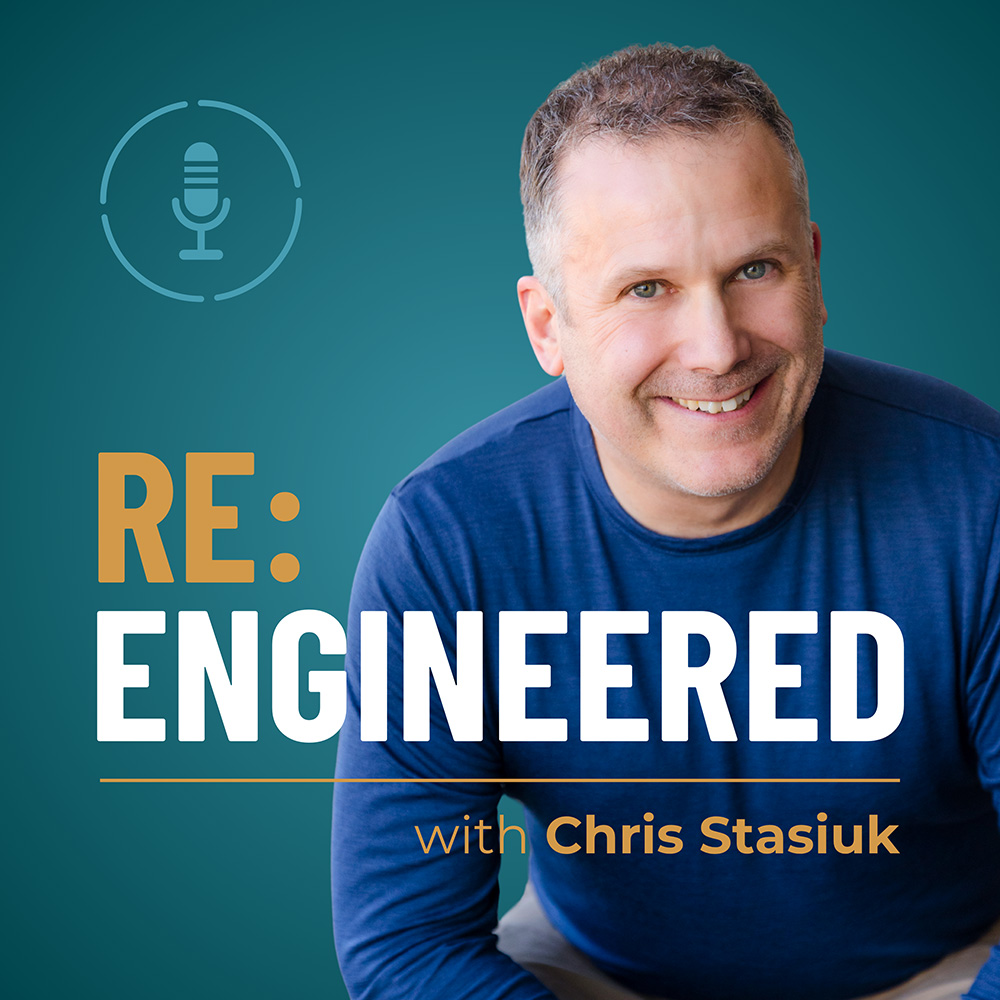
23 Jun Episode 027 – You Pre-Mortem the Project. You Don’t Pre-Mortem the Contract
Summary
Engineers run pre-mortems on technical systems without thinking about it. Before a critical install you walk the failure modes, name what could break, and put redundancy in place. You do not run a pre-mortem on the commitments you make about your own career. Chris is sitting in the consequences of that gap right now, bound by an agreement he signed when everyone was optimistic and the runway looked long. Episode 027 of Re:Engineered names the asymmetry, treats the pre-mortem as insurance, and applies it to the contracts, vesting schedules, and roles that engineers accept on assumptions nobody has guaranteed.
Takeaways
- Engineers run pre-mortems on technical systems without thinking about it. They do not run them on the commitments they make about their own career. That is the gap.
- Pre-mortems are insurance. Cheap to buy when conditions are good. Impossible to buy retroactively when conditions change.
- The failure mode in a souring agreement is rarely bad faith. It is optimism on all sides and a missed pre-mortem.
- Asking for a sunset clause is not distrust. It is the contractual equivalent of a redundant pump.
- The cost of asking for the clause is a conversation. The cost of not asking is what you carry when conditions change.
- The pre-mortem applies to any commitment that constrains your future on the assumption that current conditions hold. Equity vesting, relocation agreements, roles accepted on unguaranteed runway.
- Engineers pre-mortem projects with budgets an order of magnitude smaller than the career commitments they sign without a second read. That is not rigor. It is selective rigor, applied where it is familiar and skipped where it is uncomfortable.
Transcript
This transcript was produced by robots and left as-is. Accuracy and elegance are not guaranteed.
Nobody loves paying for insurance until they need it. I’m sitting in that exact situation right now. I signed an agreement when everyone was optimistic. The runway looked long, the relationship was good. Then the runway shortened and the agreement didn’t shorten with it. Now I’m limited in who I can talk to, which clients I can serve, while I’m trying to pivot.
To the next thing. The agreement is doing exactly what it was designed to do. The problem isn’t the agreement. The problem is that I didn’t pre-mortem before I signed it. So picture this. Brand new opportunity. Everyone’s excited. Everyone’s aligned. I had a plan. The company had a plan. We assume those plans would converge over a long enough timeline.
I didn’t stop to ask what happens if the timeline shortens. I didn’t ask what the agreement looks like under conditions neither side was planning for.
A couple of changes happened that no one saw coming. Suddenly, plans diverged. The relationship ended earlier than anyone had drawn up. But the contract didn’t care about any of that. It merely cared about what was written. There’s no villain in this story. Optimism was on all sides. The failure mode wasn’t bad faith. The failure mode was not running the pre-mort.
Engineers run premortems on technical systems without even thinking about it. Before a critical install or startup, you walk through the failure modes. What could go wrong? What’s most likely to break? What do you want in place if a specific input changes? You do it because hindsight is expensive and foresight, it’s cheap.
You’d rather pay for the redundant pump before commissioning starts than pay for the lost production afterwards.
But you don’t run a premortem on the commitments that you make about your own career. That’s a gap. The reason this gets skipped is exactly the reason people skip buying insurance. When the relationship is healthy, the contract feels like a formality. When the project is humming, the redundancy feels like overhead. Asking for a sunset clause, that feels like distrust.
Asking what happens if this ends early feels like you’re already planning to leave. It’s the same reasoning that makes people skip flood insurance because the basement’s never flooded before.
Premortems are insurance. Cheap to buy when conditions are good, impossible to buy retroactively when conditions change. Now here’s the question. Imagine this agreement is binding me in a situation neither one of us anticipated. What would have to be true for that to happen? After you ask that question, list the failure modes.
The relationship ends earlier than expected. The business pivots and my role no longer fits. The market changes and the restricted scope eats my livelihood. The company is acquired and the original spirit of the agreement doesn’t quite survive the transition. For each one of these, ask
What would need to be negotiated up front to make that situation survivable? The mitigation list is short and cheap. Sunset clauses, carve outs for preexisting relationships, shorter restriction periods, mutual termination triggers that scale the restriction with the circumstances of the ending. None of these are hostile. They are the contractual equivalent of a redundant pump.
The cost of asking is a conversation. The cost of not asking, that’s what I’m carrying right now. The premortem applies to any commitment that constrains your future on the assumption that current conditions hold. Equity vesting schedules built around a tenure assumption. Relocation agreements that bind you to a market. Roles you accept on the assumption of a runway nobody has actually guaranteed.
Engineers run premortems projects with budgets an order of magnitude smaller than the career commitments they sign without a second read. That’s not rigor. It’s selective rigor, applied where it’s familiar and skipped where it’s uncomfortable.
And I come back to the insurance. Nobody loves paying for insurance until the moment they need it. So the question to walk away with: what’s the commitment in front of you or behind you that you signed when conditions were good and never pre-mortemed against conditions changing?
If the answer is in front of you, you still have time. Run the pre-mortem before you you sign. If the answer is behind you, the lesson is mine to carry and yours to learn from. That’s the trade I’m offering with this episode.
And one more thing. The contracts you sign aren’t the only commitments worth doing a pre-mortem on. Hiring is a commitment too. I brought a senior engineer into my company and skipped the pre-mortem on whether what he said was what he actually wanted. That one cost me.
We’ll get into that one next episode.
Sorry, the comment form is closed at this time.